Pirate Radio: A Short History of Broadcasting Outside the Rules
Updated

Pirate radio is broadcasting without a licence — operating outside the regulatory frameworks that govern who is permitted to transmit and on what frequencies. The motivations have varied: commercial opportunity, political protest, cultural necessity, and sometimes pure enthusiasm for broadcasting that the official system failed to accommodate. But the common thread across pirate radio's history is the conviction that something worth broadcasting wasn't being broadcast, and that waiting for permission was taking too long.
This is not a general account of radio's development — for that, see A Short History of Radio. This is specifically about the people who broadcast outside the rules, why they did it, what they played, and what ultimately happened to them.
The Offshore Stations: Ships, Forts, and the North Sea
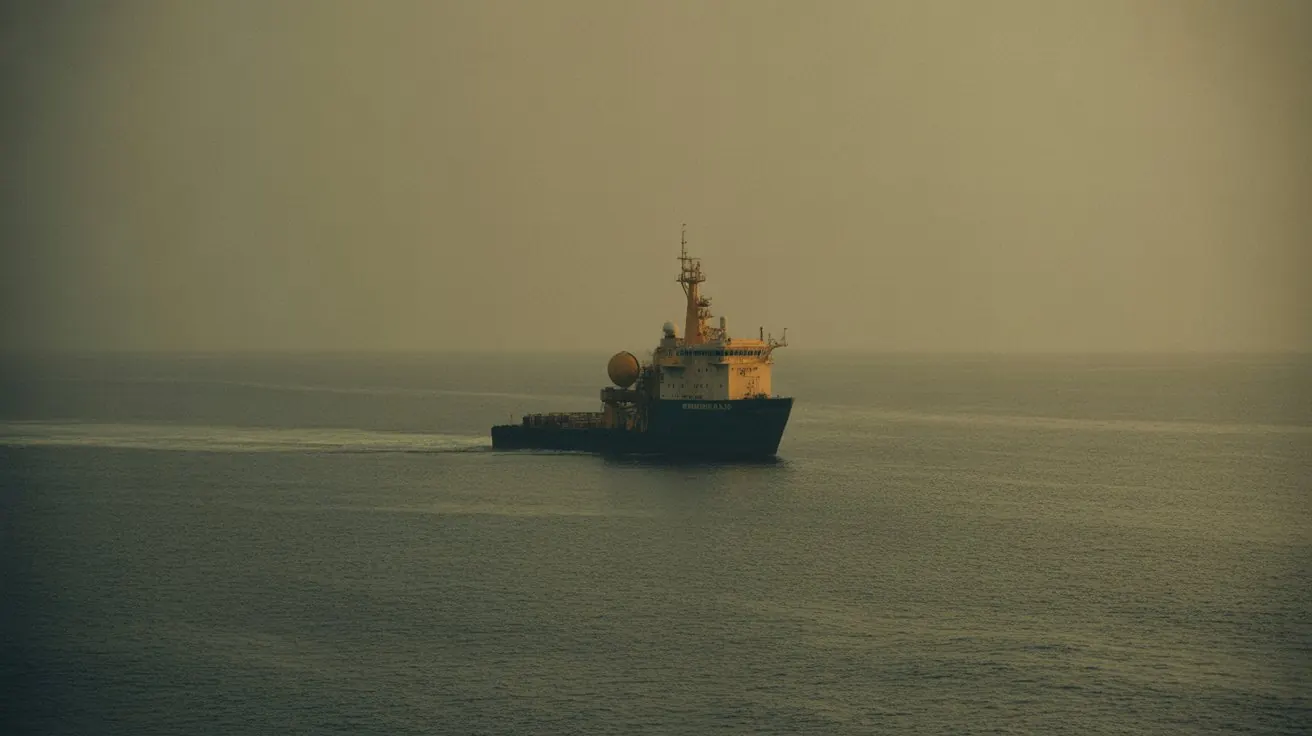
The most famous chapter in pirate radio history is also the most improbable: a fleet of ships and disused wartime sea forts anchored in international waters off the British coast, broadcasting pop music to an audience of millions who couldn't hear it any other way.
In the early 1960s, British pop listeners had few options. The BBC held a monopoly on domestic radio and allocated very limited airtime to popular music. Rock and roll, beat groups, and the emerging pop of the period were technically receivable — via Radio Luxembourg, broadcasting from the Grand Duchy — but Luxembourg's daytime signal was weak and unreliable.
The solution arrived in 1964: Radio Caroline, launched from a ship anchored off the Essex coast, began broadcasting 24-hour pop music to the UK from international waters, beyond the reach of British broadcasting law. The response was immediate and enormous. Audiences in the millions tuned in.
Caroline was soon joined by other offshore stations — Radio London, Radio Atlanta, Radio Veronica (broadcasting to the Netherlands), and others. The ships became cultural phenomena: disc jockeys whose names were spoken of as celebrities, programme formats that felt genuinely unlike the BBC, and a sense of gleeful transgression that was itself part of the appeal.
What these stations played — and this is the cultural significance that outlasted their time on air — was the music that would define the decade. British and American pop, the emerging soul sound, and the late-1960s rock explosion were all heard by millions of British listeners primarily via these unlicensed ships. The stations were pirate in name and nature, but their cultural influence was entirely legitimate.
The Shutdown and Its Aftermath
The offshore stations' success was also their undoing — commercially and politically. British commercial interests and the BBC alike lobbied for legislation to close them, and in 1967, the Marine Etc. Broadcasting (Offences) Act made it illegal for British subjects to supply, advertise on, or work for the offshore stations. Most closed within weeks.
But the cultural argument the pirates had made — that there was a vast, underserved audience for popular music radio — had been irrefutably proved. Within months of the offshore closures, the BBC launched Radio 1, a new national pop music station explicitly designed to fill the gap. Many of the pirates' most prominent DJs moved directly to the BBC.
The pirates had, in effect, forced a fundamental change in British broadcasting policy not through lobbying or persuasion but through sheer audience size.
Urban Pirate Radio: The 1980s and 1990s
The offshore era ended, but the pirate impulse didn't. By the 1980s, a new generation of unlicensed stations was operating — this time not from ships but from tower blocks, council estates, and rooftops in British cities.
These were different operations, serving different communities. While the offshore stations had been largely commercial enterprises targeting a broad mainstream audience, the urban pirate stations of the 1980s and 1990s were often rooted in specific communities and musical cultures that were genuinely absent from mainstream radio.
In London, pirate stations became essential infrastructure for the emerging jungle, drum and bass, garage, grime, and UK hip-hop scenes. Stations broadcast on FM, typically with transmitters mounted on tower block roofs, operating with varying degrees of stability depending on how quickly Ofcom's enforcement officers could locate and remove the equipment. A station might be shut down on a Friday and back on a different frequency by Sunday.
The social and cultural function of these stations was significant. They provided airtime for DJs and MCs who would go on to shape British music culture in the late 1990s and 2000s. They gave communities a voice on air — literally, in their own accent, playing their own music, talking about their own streets — at a time when mainstream radio provided very little of that. Many of the UK's most commercially successful dance music DJs and producers traced their first broadcast experience to an unlicensed FM transmitter.
Pirate Radio Elsewhere
The pirate phenomenon was not uniquely British. Across Europe, similar dynamics played out in different regulatory contexts.
In the Netherlands, Radio Veronica was one of the original North Sea offshore stations, eventually gaining a legal licence after the offshore closure. Italy had a more permissive regulatory environment, and from the mid-1970s a vast number of unofficial stations emerged following legislative changes. In the United States, low-power FM piracy has a long history, often associated with community and political causes — the micro-radio movement of the 1990s eventually influenced FCC policy on low-power FM licensing.
What connects these geographically different stories is the common theme: pirate broadcasting typically arose where the licensed system was perceived as failing its audience — whether by ignoring popular culture, underserving minority communities, or maintaining a regulatory structure designed to protect incumbent interests.
Legacy: What Pirate Radio Changed
The legacy of pirate radio operates on several levels.
Culturally, the offshore stations and urban pirates alike served as launch pads for musical movements that the mainstream wasn't ready for. British pop in the 1960s, and British dance music from the 1980s onwards, owe something structural — not just inspirational — to unlicensed broadcasting.
Regulatorily, pirate radio repeatedly forced reforms in countries where it operated. The BBC's response to offshore piracy — Radio 1 — is the most famous example. Low-power FM policy changes in the US, and community radio licensing reforms in the UK, were in part responses to demonstrated public demand that pirate stations had proved existed.
Culturally again, there is a romanticisation of pirate radio that isn't entirely accurate. The offshore stations were largely commercial enterprises, and the urban pirates operated in legal grey zones that created real risks for participants. The romance of the pirate — the underdog broadcasting against the establishment — doesn't fully capture the commercial motivations or the complicated ethical territory.
What remains true is the core argument pirate radio made, repeatedly, in country after country: there is music that people want to hear, communities that want a voice on air, and programming worth broadcasting that the licensed system has left out. When that argument was right — and it often was — pirate radio was where you could hear it.
Pirate Radio and the Internet
The rise of internet radio changed the calculus considerably. Much of what pirate radio historically did — broadcasting underserved music to underserved communities, creating platforms for emerging artists and DJs — can now be done legally via internet streaming.
A station that would once have required an illicit FM transmitter can now reach a global audience through a legal internet stream with no licence required for the broadcast itself (separate rights obligations for music may still apply).
This hasn't eliminated FM piracy — unlicensed local FM broadcasting continues in many cities — but it has removed the necessity. Explore internet radio by genre and country and you'll find stations covering an enormous range of communities and musical cultures that would once have had no legal outlet. The democratisation that pirate radio pointed towards has largely arrived, through the internet.
Frequently Asked Questions
Was Radio Caroline a pirate station? Yes, in the sense that it broadcast without a UK licence, from a ship in international waters, in deliberate circumvention of British broadcasting law. It was a commercial operation rather than a community station, but it operated outside the regulatory framework — hence "pirate".
Why did pirate radio use ships? The offshore stations anchored in international waters beyond UK territorial limits, where British broadcasting law did not apply. A ship anchored offshore could broadcast into the UK without technically violating domestic law — until specific offshore broadcasting legislation was passed to close this loophole.
Is pirate radio still happening? Unlicensed FM broadcasting continues in various cities, including in the UK and US. The motivations are usually community or musical: serving a local community whose music and culture is absent from mainstream or licensed local radio. Online streaming has provided a legal alternative for many who would previously have gone the pirate route.
Did pirate radio help any famous artists? Yes — numerous DJs and producers who shaped UK music culture from the 1990s onwards trace early broadcasting experience to pirate stations. The jungle, drum and bass, garage, and grime scenes in particular were substantially developed on unlicensed FM before any of those genres had significant mainstream radio presence.
What happened to the offshore pirate DJs? Many of the most prominent offshore DJs moved to the BBC after it launched Radio 1 in 1967 — effectively the BBC recruited the pirate talent to staff its new pop station. Some became long-serving Radio 1 presenters.
Summary
Pirate radio's history is really a series of arguments — about who gets to broadcast, which communities deserve airtime, and which music is worth playing. The argument was made in international waters, from tower block rooftops, and on low-power transmitters in dozens of countries. And in country after country, the argument was largely won: not by making piracy legal, but by the licensed broadcasting system eventually expanding to accommodate what the pirates had demonstrated was needed.
The legacy is cultural and regulatory: music movements incubated on unlicensed air, DJs who defined a decade on borrowed frequencies, and licensing reforms that followed the proof of demand. The ships are gone. The transmitters on the rooftops are mostly gone. What remains is in the music.
Discover radio from around the world — no licence required →