Radio to Fall Asleep To (And How to Use a Sleep Timer)
Updated

Some links below go to shops. As an Amazon Associate, 72FM earns from qualifying purchases, at no extra cost to you — and nothing here is recommended because it pays.
The best radio for falling asleep is slow, instrumental, and dynamically flat — ambient drones, quiet classical, soft late-night chill — played low, with a sleep timer set so the stream switches itself off once you've gone under. Start with the stations on the ambient genre page or the 72FM Chill channel, set a timer for thirty to forty-five minutes, and let the radio do the rest. Here's how to choose the right sound, and how to set the whole thing up so it works night after night.
Why radio is good company at bedtime
Falling asleep is mostly the art of giving your mind something gentler to hold than its own thoughts. Radio is unusually good at this, for reasons that have little to do with the music itself.
It's continuous — no track-to-track silence where your brain perks up and asks what's next. It's decision-free — no queue to build at exactly the hour you're least equipped to build one. And it's slightly impersonal, in the best way: a stream that was playing before you arrived and will keep playing after you've gone carries none of the weight of your own carefully chosen playlist. You're not curating. You're just drifting alongside something.
Research on music and sleep, for what it's worth, points in a consistent general direction: slow, familiar, low-intensity music seems to help some people fall asleep more easily, particularly when it becomes part of a regular routine. The effect isn't universal, and it isn't magic — but the routine part matters as much as the music.
What to listen for (and what to avoid)
A good sleep station passes four tests:
- Slow. Tempos at or below a resting heartbeat feel like an invitation to match them.
- Instrumental. Voices make you listen. Even a beautiful lyric is a small hook into wakefulness.
- Flat dynamics. The fatal flaw of otherwise lovely stations is the sudden swell — the orchestral climax or bass drop that arrives twenty minutes after you closed your eyes.
- No interruptions. Ad breaks, jingles and chatty presenters are wake-up calls in disguise. Stations from the public directory vary here, since they carry whatever their broadcaster includes; 72FM adds no advertising of its own, but it cannot remove a broadcaster's.
What to avoid is mostly the mirror image: news and talk radio (your brain treats speech as something to follow), anything with builds and drops, and anything new and interesting. Bedtime is the one listening moment where being boring is the entire job description.
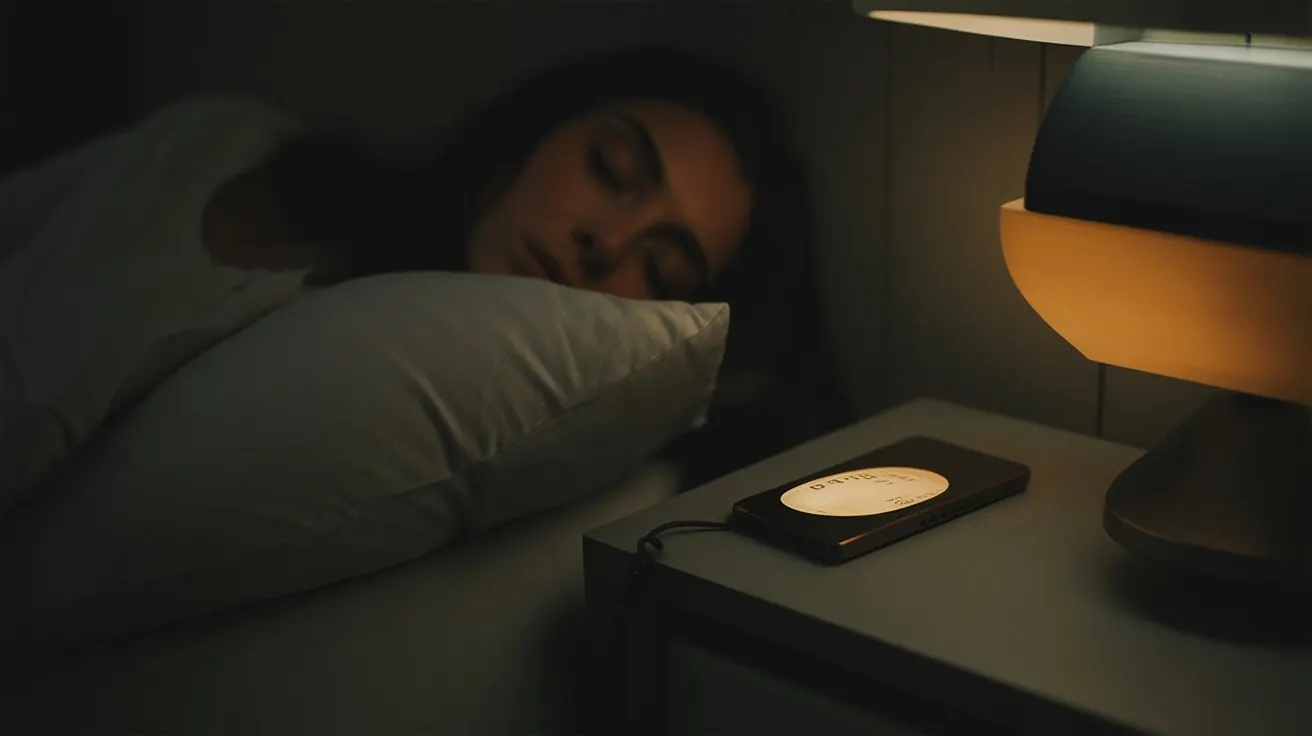
The best genres for sleep
Ambient
The natural first choice. Long, slow tones with no rhythmic pull and almost no events — ambient is music designed to be drifted away from. Browse the ambient genre page and look for stations on the darker, quieter end of the spectrum.
Quiet classical
Solo piano, slow strings, nocturnes — quiet classical has lulled people to sleep for centuries. The one caution is dynamics: a station that programmes full symphonies will eventually get loud. Stations focused on calm, late-evening classical are the safer bet; browse the classical genre page for candidates.
Late-night chill and downtempo
For listeners who find pure ambient too empty, soft downtempo adds just enough warmth and shape. 72FM Chill, one of the 72FM Mixes, is curated precisely for this register — unhurried, lyric-light, and steady from one hour to the next.
Gentle sounds of elsewhere
Some people sleep best to quiet music in a language they don't understand — distant enough to be texture rather than speech. A soft station from another country can work beautifully; just audition it while awake first to check for ad breaks and jingles.
How to use a sleep timer (and why you should)
Leaving a stream running all night has real downsides: it can disturb the lighter phases of sleep later on, it wears on whoever shares the room, and it uses data and battery for hours of unconscious listening.
A sleep timer solves all of it. You set a duration, the music plays, and when the time is up the stream stops on its own — no glowing screen, no 3am bass line, no dead phone in the morning.
A simple setup that works:
- Choose your station before you're tired. Audition sleep stations in the evening, not at midnight. Save the keepers as favourites.
- Set the timer for 30–45 minutes. Most people who fall asleep to audio are gone well within that window. If you're regularly awake when it ends, lengthen it rather than abandoning it.
- Set the volume lower than feels right. Sleep audio should be on the edge of perception. If you can comfortably follow the music, it's too loud.
- Use a speaker, not headphones. Earbuds and side-sleeping are an unhappy pair, and room sound at low volume is gentler anyway. If you share the room, sleep headphones built into a soft headband are the exception that works.
- Repeat the same setup nightly. Same station, same timer, same volume. Within a couple of weeks the first minute of that station starts to feel like the beginning of sleep itself.
On 72FM the free tier has a 30-minute sleep timer; Premium unlocks every length and lifts the daily hour — £4.99 for 30 days or £29 for a year (as listed on 72fm.com), with a 7-day money-back guarantee if it turns out not to be your thing. Details are on the Premium page.
A bedtime sequence that works
| Step | What to do |
|---|---|
| 30 min before bed | Switch from whatever you were playing to your sleep station — let the wind-down start early |
| Lights out | Set the sleep timer (30–45 min), volume to barely-there |
| In bed | Nothing. The whole point is that there's nothing left to manage |
| Morning | If you woke before the timer ended last night, add 15 minutes tonight |
The short version
Pick a slow, instrumental, interruption-free station; play it quietly; set a 30–45 minute sleep timer; repeat nightly until the sound itself means sleep. That's the entire method — the consistency does as much work as the music.
When you want a longer runway than the free 30 minutes, every sleep-timer length comes with Premium — and the radio switches itself off long after you have.
Frequently asked questions
Is it healthy to fall asleep to the radio?
For most people, falling asleep to quiet audio is harmless, and research suggests calm, familiar music may help some listeners drop off more easily. The sensible precautions: keep the volume low, use a timer rather than playing sound all night, and skip headphones in bed.
What kind of radio is best for sleep?
Slow, instrumental, dynamically flat, and uninterrupted: ambient, quiet classical, and soft chill are the reliable choices. Avoid talk, news, and anything with builds, drops or ad breaks.
Why use a sleep timer instead of just letting it play?
All-night audio can intrude on lighter sleep phases, disturbs partners, and drains battery and data to no benefit. A timer gives you the falling-asleep help without the all-night cost.
Do I need an account to try sleep radio on 72FM?
No — public directory stations and collections play free in any browser with no account needed to start. The 72FM Mixes like 72FM Chill are free, and so is a 30-minute sleep timer; [Premium](/premium) unlocks every timer length.